I recently announced that the ebook versions of my anthology of short stories and flash fictions, Ethereal Worlds, was available for sale. After going through two proofs, I've now put the paperback on sale as well.
Eager readers can immediately order it from my CreateSpace store. Or if you would rather, it should show up in Amazon shortly. Keep in mind, I have a Kindle version at Amazon, so in searching for it, make sure it is the paperback version. The book should eventually filter out to other online stores as well.
And ebook versions can also be ordered through Amazon for the Kindle, Barnes and Noble for the Nook, and any other format at Smashwords.
First five years of writing were a blast. Can't wait to see what comes out of the next five.
Tuesday, January 18, 2011

Saturday, January 15, 2011
Preparing to Smash Words
This post is aimed mostly at writers and editors who want to know fairly easy ways to set up a book to be published by Smashwords, an ebook creator and distributor for authors and publishing companies. So if you're not that interested in writer techy talk, you may want to return to your regularly scheduled activity. If you are, then read on.
The big tip I'm wanting to give involves how to retain the formatting of your book, primarily italics, centering, and bolding. Why is this needed?
Smashwords is picky about the formatting of the text. They want a Word doc file, with the body text in the "Normal" style (Word's default). There are two ways of doing this. One is to mark all your text and change the style to "Normal." Of course, what happens is any chapter headings lose the heading style, which means you'd have to go back through each chapter and reformat it. Not the favorite way to spend thirty minutes to an hour, depending on how many chapters you have.
But that method also sometimes doesn't totally work for them. Word has a way of defeating the purpose of making it all the same text. So the recommended method that will ensure all underlying formatting and text has been changed to "Normal" is to export it as a text file, and then re-import that back into Word.
Problem is, if you do that, you lose all italics and other formatting, which would mean spending who knows how many hours going through your novel and reformatting all the italics and other styles needed. I was faced with that reality when the "select and change to Normal" didn't work for me. There had to be a way to preserve the formatting through the conversion to unformatted text. Yes, I know that sounds silly, but I did find a way.
I'll work on this as if you are using Word (I'm using ver. 2002, outdated, I know, but these instructions should work for most any version). I use Open Office, but eventually for Smashwords you need to create a Word doc file, and for me the search/replace commands are easier to use in Word, so that's where I'll do this formatting once I've written the story, edited it, then I'll export it to Word and do the following. At some point I'll create a macro to do this for me.
The first task is to mark any and all formatted text you want to preserve. For this, I'm assuming your chapter headings are all in a different style from your body text, preferably Header1 as that will tend to automate the process of creating a table of contents in most software, including Word itself, and ebook creation programs. There are search/replace commands you can do to fix that if it isn't, but that's a different post.
The formatting that most books have involve italics, bold (usually titles), and centering. Let's tackle italics first, since that is the most commonly used formatting in a novel.
In the Word document, bring up the "Find/Replace" window. In the menu, click "Edit" and then "Replace." Or alternately click Ctrl-H. When you have that window up, click the "More" button. With the cursor in the "Find what" field, click the "Format" button at the bottom and then select "Styles" from the menu that pops up. Scroll down until you see the style that the body of the text is in. For Word, that would default to "Normal." I have a special style I call "Submission" that I use, so that's what I would select.
Now click the "Format" button again, but this time select "Font." A window will pop up. Only click on the "Italics" in the "Font style" window. Do not select a font or size. Click OK. You will now notice under the "Find what" field that it will look for italicized text in the selected body text style.
Then move your cursor to the "Replace with" field and enter the following: ~i~^&~/i~
Once entered, click on the "Replace All" button. What should happen if you've set this up right is any italicized text in your document should be surrounded with the ~i~<text>~/i~ coding. You don't have to use this specific character combination, but you want to make it unique enough that you're not likely to match any existing text in your document, because once we're done, you'll need to delete them.
You can then do something similar to search on bold and surround them with ~b~<text>~/b~, or centered text with ~ct~<text>~/ct~, except for centered text, instead of going to "Font" under the "Format" button, you'll go to "Paragraph" and in the "Alignment" drop down box, select "Centered" and click OK without selecting anything else. If you had the font setting in the field, you will need to click the "No Formatting" button first while your cursor is in the "Find what" field, then select your body text style again and then the center format under Paragraphs.
Your chapter titles are a different issue. If you've set them as a different style as you typed your work, setting them up is easy. Clear any formatting in the "Find what" field, and then click the "Format" button and go to "Styles." Find the style of your chapter headings, for example, "Header1." Select it and click OK. Once done, that style should be showing under the "Find what" window as what will be searched for.
In the "Replace what" field, enter: ~ch~^&~/ch~
Click the "Replace All" button, and all your chapter headings, assuming they are the only text using that style in the document, will be surrounded with the ~ch~<text>~/ch~.
Though few authors are going to have any other formatting they need to save through the text conversion, if you have more, use the same principles to save it.
Now you can save the file into a plain text file using from the menu "File" and "Save as," and selecting in the "Type" drop down box the "Plain Text" option. Once saved, open the file back up in Word. Then click Ctrl-A and select "Normal" from the style drop down box or through the menu at "Format" and "Styles." What you will have is a file of text all in the default Word style, Normal. Just what Smashwords wants, except now we need to replace the formatting.
Open the "Find/Replace" window again. To reconvert the italics, in the "Find what" field, type: ~i~*~/i~
With your cursor in the "Replace what" field, click on the "Format" button, then select "Font" and in that window select "Italics" and click OK. You'll see italics listed under the "Replace what" field. You shouldn't need to enter anything in the "Replace what" field, but to ensure your italicized text stays put, you can enter: ^&
Before you do anything else, click the box next to "Use wildcards" in the bottom left of the window.
Once you've done all that, click "Replace All" and you'll see all the text, including the coding, converted to italics.
Now you'll need to get rid of the coding. Open the "Find/Replace" window again, clear any formatting and remove the check on the box "Use Wildcards." Then enter first ~i~ in the "Find what" field and nothing in the "Replace what" field. Click "Replace All" and they will disappear. Do the same for the ending code: ~/i~.
Repeat the process for the others, except all you need to do to the chapter headings is to replace them with the Header1 style. And to speed things up, you may want to do all the converting first, then come back and remove the coding once everything is converted.
Once that is done, edit the Header1 style to be a maximum of 16 pt font size, the maximum Smashwords allows. Then edit the Normal style to put in any paragraph intentions and other formatting specific to paragraphs.
The only other issue left is to go through the file and ensure there are only four maximum lines between the end of one chapter and the beginning of the next chapter heading. I usually put in three to be safe. No easy way to automate that, but it does give you an opportunity as your scrolling through the document to double-check the formatting to ensure nothing odd happened in the find/replaces.
Once done and saved, you should have a file Smashwords will love, and you've retained your formatting. A win-win on both sides!
The big tip I'm wanting to give involves how to retain the formatting of your book, primarily italics, centering, and bolding. Why is this needed?
Smashwords is picky about the formatting of the text. They want a Word doc file, with the body text in the "Normal" style (Word's default). There are two ways of doing this. One is to mark all your text and change the style to "Normal." Of course, what happens is any chapter headings lose the heading style, which means you'd have to go back through each chapter and reformat it. Not the favorite way to spend thirty minutes to an hour, depending on how many chapters you have.
But that method also sometimes doesn't totally work for them. Word has a way of defeating the purpose of making it all the same text. So the recommended method that will ensure all underlying formatting and text has been changed to "Normal" is to export it as a text file, and then re-import that back into Word.
Problem is, if you do that, you lose all italics and other formatting, which would mean spending who knows how many hours going through your novel and reformatting all the italics and other styles needed. I was faced with that reality when the "select and change to Normal" didn't work for me. There had to be a way to preserve the formatting through the conversion to unformatted text. Yes, I know that sounds silly, but I did find a way.
I'll work on this as if you are using Word (I'm using ver. 2002, outdated, I know, but these instructions should work for most any version). I use Open Office, but eventually for Smashwords you need to create a Word doc file, and for me the search/replace commands are easier to use in Word, so that's where I'll do this formatting once I've written the story, edited it, then I'll export it to Word and do the following. At some point I'll create a macro to do this for me.
The first task is to mark any and all formatted text you want to preserve. For this, I'm assuming your chapter headings are all in a different style from your body text, preferably Header1 as that will tend to automate the process of creating a table of contents in most software, including Word itself, and ebook creation programs. There are search/replace commands you can do to fix that if it isn't, but that's a different post.
The formatting that most books have involve italics, bold (usually titles), and centering. Let's tackle italics first, since that is the most commonly used formatting in a novel.
In the Word document, bring up the "Find/Replace" window. In the menu, click "Edit" and then "Replace." Or alternately click Ctrl-H. When you have that window up, click the "More" button. With the cursor in the "Find what" field, click the "Format" button at the bottom and then select "Styles" from the menu that pops up. Scroll down until you see the style that the body of the text is in. For Word, that would default to "Normal." I have a special style I call "Submission" that I use, so that's what I would select.
Now click the "Format" button again, but this time select "Font." A window will pop up. Only click on the "Italics" in the "Font style" window. Do not select a font or size. Click OK. You will now notice under the "Find what" field that it will look for italicized text in the selected body text style.
Then move your cursor to the "Replace with" field and enter the following: ~i~^&~/i~
Once entered, click on the "Replace All" button. What should happen if you've set this up right is any italicized text in your document should be surrounded with the ~i~<text>~/i~ coding. You don't have to use this specific character combination, but you want to make it unique enough that you're not likely to match any existing text in your document, because once we're done, you'll need to delete them.
You can then do something similar to search on bold and surround them with ~b~<text>~/b~, or centered text with ~ct~<text>~/ct~, except for centered text, instead of going to "Font" under the "Format" button, you'll go to "Paragraph" and in the "Alignment" drop down box, select "Centered" and click OK without selecting anything else. If you had the font setting in the field, you will need to click the "No Formatting" button first while your cursor is in the "Find what" field, then select your body text style again and then the center format under Paragraphs.
Your chapter titles are a different issue. If you've set them as a different style as you typed your work, setting them up is easy. Clear any formatting in the "Find what" field, and then click the "Format" button and go to "Styles." Find the style of your chapter headings, for example, "Header1." Select it and click OK. Once done, that style should be showing under the "Find what" window as what will be searched for.
In the "Replace what" field, enter: ~ch~^&~/ch~
Click the "Replace All" button, and all your chapter headings, assuming they are the only text using that style in the document, will be surrounded with the ~ch~<text>~/ch~.
Though few authors are going to have any other formatting they need to save through the text conversion, if you have more, use the same principles to save it.
Now you can save the file into a plain text file using from the menu "File" and "Save as," and selecting in the "Type" drop down box the "Plain Text" option. Once saved, open the file back up in Word. Then click Ctrl-A and select "Normal" from the style drop down box or through the menu at "Format" and "Styles." What you will have is a file of text all in the default Word style, Normal. Just what Smashwords wants, except now we need to replace the formatting.
Open the "Find/Replace" window again. To reconvert the italics, in the "Find what" field, type: ~i~*~/i~
With your cursor in the "Replace what" field, click on the "Format" button, then select "Font" and in that window select "Italics" and click OK. You'll see italics listed under the "Replace what" field. You shouldn't need to enter anything in the "Replace what" field, but to ensure your italicized text stays put, you can enter: ^&
Before you do anything else, click the box next to "Use wildcards" in the bottom left of the window.
Once you've done all that, click "Replace All" and you'll see all the text, including the coding, converted to italics.
Now you'll need to get rid of the coding. Open the "Find/Replace" window again, clear any formatting and remove the check on the box "Use Wildcards." Then enter first ~i~ in the "Find what" field and nothing in the "Replace what" field. Click "Replace All" and they will disappear. Do the same for the ending code: ~/i~.
Repeat the process for the others, except all you need to do to the chapter headings is to replace them with the Header1 style. And to speed things up, you may want to do all the converting first, then come back and remove the coding once everything is converted.
Once that is done, edit the Header1 style to be a maximum of 16 pt font size, the maximum Smashwords allows. Then edit the Normal style to put in any paragraph intentions and other formatting specific to paragraphs.
The only other issue left is to go through the file and ensure there are only four maximum lines between the end of one chapter and the beginning of the next chapter heading. I usually put in three to be safe. No easy way to automate that, but it does give you an opportunity as your scrolling through the document to double-check the formatting to ensure nothing odd happened in the find/replaces.
Once done and saved, you should have a file Smashwords will love, and you've retained your formatting. A win-win on both sides!
Monday, January 10, 2011
Is It Christian Fiction?
I'm shamelessly using author Mike Duran's post on this topic to launch into a more expanded thought about the subject. He discusses the issues surrounding how to address a question of "Is this Christian Fiction?"
His answer is it depends on what you mean by "Christian Fiction"? After all, there are those stories which are obviously targeting a Christian market, and those which are not. But in between those two are stories with some underlying Christian themes, but the stories themselves are not overtly so. Sometimes the Christian themes in them are themes that most people would identify with, and so not exclusively "Christian" even though perhaps the author writing the story is Christian and has that ethos in mind.
The problem evolves when a story in that in-between stage makes its appearance on the public scene. Because it is in that gray area, different people are going to identify it as to whether it is Christian or not, based on their own experience or sensitivity to the issues. And what sometimes happens are those who are sensitive to the issue, at the first hint or mention of anything Christian sounding, are going to label it as a book trying to "trick" people into reading "Christian propaganda."
I've not had to deal with this a whole lot, as of yet. Mainly because most of my two published books have been sold on the Internet, not in a brick and mortar bookstore. No one has had to figure out where to shelve my books. If one reads my blurb, while I don't come right out and say, "This is Christian Fiction," it is pretty obvious that it deals with God as a character in the story, though an unseen one. The main character is clearly a Christian, as is his family and the culture he is in.
I've had it happen before, but am still surprised if someone doesn't get that this is Christian fiction. I shouldn't have to spell it out to them. So why don't I? You want to know why I don't put the following in my blurb:
It's simple. Some people have preconceived ideas about what Christian Fiction is, and I would rather my work be judged on its own merit. So how I approach this subject is based on content. If someone were to ask me if a book of mine was Christian Fiction, I would respond that my book deals with...and list out what the story is about. Then go on to tell them what's in the book, both the Christian elements and the other things, like the basic plot. Then if they think it is Christian Fiction based on that, so be it. If they don't, then so be it.
But if I state my subjective opinion, or try to avoid the label explicitly, when they, if they, read it, they may think I lied to them if their subjective opinion is different. But by focusing on the content, it allows the person to decide. If the story sounds interesting enough, they may not care that it has Christian characters and themes to it. As long as the story is good.
And I have some books, which I hope will come out in the next couple of years, which don't have anything to do with religion. Maybe one can pick up on some generic "good" themes, but the label "Christian Fiction" wouldn't fit them at all, despite the fact that I am a Christian and have written what most would consider Christian Fiction.
In all cases, my opinion is to let the content do the talking. I avoid the label "Christian Fiction" from my end only because I don't want to short-change the reader by them assuming what my story is like based on what they've heard is "Christian Fiction." And because there are elements to my stories that some Christians wouldn't care for as well, they might not call it "Christian." Because "Christian" isn't one homogeneous group.
My brother took my first book, Infinite Realities, and let some Muslims friends read it. Guess what? He said they liked it. Despite the fact it was obviously Christian, they didn't feel I preached at them. Would they like my expanded book coming out, hopefully soon? Maybe not. But the point is, they liked it even though they are not Christian.
Some Christians will like my stuff, some won't. Some who are not Christian will like it, and some won't. Why should I cut one or the other group off by saying, "This is only for Christians"?
To me, that's what it comes down to. I naturally want the biggest exposure, and I know some have preconceived ideas what anything labeled "Christian Fiction" is. I'd rather it be judged on the content, so I'll let them decide by telling them what the book is about, without avoiding the Christian elements in it. That makes the most sense to me.
What about you? How do you judge whether something is Christian Fiction or not?
His answer is it depends on what you mean by "Christian Fiction"? After all, there are those stories which are obviously targeting a Christian market, and those which are not. But in between those two are stories with some underlying Christian themes, but the stories themselves are not overtly so. Sometimes the Christian themes in them are themes that most people would identify with, and so not exclusively "Christian" even though perhaps the author writing the story is Christian and has that ethos in mind.
The problem evolves when a story in that in-between stage makes its appearance on the public scene. Because it is in that gray area, different people are going to identify it as to whether it is Christian or not, based on their own experience or sensitivity to the issues. And what sometimes happens are those who are sensitive to the issue, at the first hint or mention of anything Christian sounding, are going to label it as a book trying to "trick" people into reading "Christian propaganda."
I've not had to deal with this a whole lot, as of yet. Mainly because most of my two published books have been sold on the Internet, not in a brick and mortar bookstore. No one has had to figure out where to shelve my books. If one reads my blurb, while I don't come right out and say, "This is Christian Fiction," it is pretty obvious that it deals with God as a character in the story, though an unseen one. The main character is clearly a Christian, as is his family and the culture he is in.
I've had it happen before, but am still surprised if someone doesn't get that this is Christian fiction. I shouldn't have to spell it out to them. So why don't I? You want to know why I don't put the following in my blurb:
Warning: This book contains explicit Christian messages and images. Your life could be vastly improved by reading this book. Unhinged joy could result if this story is not consumed in moderation. Buy at your own risk.
It's simple. Some people have preconceived ideas about what Christian Fiction is, and I would rather my work be judged on its own merit. So how I approach this subject is based on content. If someone were to ask me if a book of mine was Christian Fiction, I would respond that my book deals with...and list out what the story is about. Then go on to tell them what's in the book, both the Christian elements and the other things, like the basic plot. Then if they think it is Christian Fiction based on that, so be it. If they don't, then so be it.
But if I state my subjective opinion, or try to avoid the label explicitly, when they, if they, read it, they may think I lied to them if their subjective opinion is different. But by focusing on the content, it allows the person to decide. If the story sounds interesting enough, they may not care that it has Christian characters and themes to it. As long as the story is good.
And I have some books, which I hope will come out in the next couple of years, which don't have anything to do with religion. Maybe one can pick up on some generic "good" themes, but the label "Christian Fiction" wouldn't fit them at all, despite the fact that I am a Christian and have written what most would consider Christian Fiction.
In all cases, my opinion is to let the content do the talking. I avoid the label "Christian Fiction" from my end only because I don't want to short-change the reader by them assuming what my story is like based on what they've heard is "Christian Fiction." And because there are elements to my stories that some Christians wouldn't care for as well, they might not call it "Christian." Because "Christian" isn't one homogeneous group.
My brother took my first book, Infinite Realities, and let some Muslims friends read it. Guess what? He said they liked it. Despite the fact it was obviously Christian, they didn't feel I preached at them. Would they like my expanded book coming out, hopefully soon? Maybe not. But the point is, they liked it even though they are not Christian.
Some Christians will like my stuff, some won't. Some who are not Christian will like it, and some won't. Why should I cut one or the other group off by saying, "This is only for Christians"?
To me, that's what it comes down to. I naturally want the biggest exposure, and I know some have preconceived ideas what anything labeled "Christian Fiction" is. I'd rather it be judged on the content, so I'll let them decide by telling them what the book is about, without avoiding the Christian elements in it. That makes the most sense to me.
What about you? How do you judge whether something is Christian Fiction or not?
Wednesday, January 5, 2011
Kindle Enters the Lending Market
If you haven't heard, Amazon has put into place a means by which ebooks purchased through Amazon on the Kindle can be loaned out to other users, in a means similar to Barnes & Noble's Nook. It was one of the main advantages that the Nook had over the Kindle. But the publisher of the ebook has to allow it to be lendable. Something I don't see most publishers choosing not to do.
With Nook growing in market share, Amazon seeks to take away one of the main reasons the customer might choose a Nook over a Kindle. Meanwhile, the recent opening of Barnes & Noble's PubIt service seeks to wedge into the growing ebook market by offering a service similar to Amazon's Digital Text Platform, where publishers and authors can publish ebooks and sell directly on Barnes & Noble's site. An obvious move to grow their ebook inventory to offset one of Amazon's biggest advantages in offering the Kindle: the biggest inventory of ebooks available.
Problem is, Amazon is so far ahead on the curve here, that it will be an uphill battle for B&N to catch up. Not impossible, mind you, but still they are behind Amazon on this by several years. It has only been in the last year when it became painfully obvious how fast the ebook market was growing, that they have pushed to get these features into place. But while they are rushing to catch the ebook wave before it gets away from them, Amazon is already surfing on top.
But lending is an important feature which should be expanded on and grow. Why? Because it will help cut into piracy of ebooks. Piracy will always be with us, but one of the reasons some give why they should be free to give a copy of an ebook to someone else is that libraries share their books, and people loan out their books, or sell them used, all the time. This is no different.
Sorry to burst your bubble, but it is very different. If I take my copy of The Lion, The Witch, and the Wardrobe and let a friend borrow it, and then the next day decide I want to read it...guess what? I don't have the copy. Because I have loaned out the copy I purchased, I no longer have it in my possession to read. I didn't run to Kinkos and have them make a copy, then give it to my friend. That would be breaking copyright law. And if I decide I'll go check out the book at my library, I may find that someone else has that copy of the book checked out, and I can't use it. Why? Because the copy that the library purchased can only be in one hand at a time. The library doesn't make a copy of each book to give to borrowers.
As I've mentioned before, copyright means who has the legal right to make a copy of a work. When I loan out a copy I have, I'm not making another copy of it, thus breaking no copyright law. However, when I loan out a copy of an ebook, what I usually would do is to make a copy of that book onto that person's device. In order to avoid breaking copyright law, I then have to delete my copy from my device so that there is only one copy. But few bother with that last step. They may fear not getting the copy back. Or they may fear the person could lose it, and it would be gone (much like a real book). So it is easier to leave your own copy on your device. Maybe you won't read it, but the reality is you've broken copyright law by making a copy of a book without permission.
The lending function solves this dilemma for the person who wants to be legal, but generally isn't for the above reasons. Because even if you loan a digital book out and delete the copy off your hard drive, when you get it back, you have no way to control whether the other person has deleted their copy, and most likely they haven't. With this lending function, not only does it insure that you keep the ownership of that copy, not only does it allow you to loan out a book and not break copyright law since you can't use that book while it is loaned out, not only does it insure that after the predetermined time is up, you'll get use of the book back, but it insures that the person who received the loaned book will no longer have access to it, so they don't break copyright law either.
This will help reduce what I might call incidental piracy. The person isn't wanting or trying to break copyright law, but does so in an attempt to loan a book to someone. But they aren't posting the copy on the Internet for the world to download. It isn't overt piracy. Most who commit incidental piracy aren't intending to break copyright law and will welcome a means whereby they can loan out books without worrying about breaking the law.
Adding the vast number of Kindle users to the army of those available to lend books will speed up the process of making this a standard feature on ebooks. Libraries could benefit from this greatly, by being able to lend out ebooks. Everyone benefits from this functionality. Kudos to Amazon for putting this into place, and big kudos goes to Barnes & Noble for introducing this function on the Nook and so forcing folks like Amazon to adopt this as a standard feature.
Have you needed to lend out an ebook to someone? If so, how did you do it?
With Nook growing in market share, Amazon seeks to take away one of the main reasons the customer might choose a Nook over a Kindle. Meanwhile, the recent opening of Barnes & Noble's PubIt service seeks to wedge into the growing ebook market by offering a service similar to Amazon's Digital Text Platform, where publishers and authors can publish ebooks and sell directly on Barnes & Noble's site. An obvious move to grow their ebook inventory to offset one of Amazon's biggest advantages in offering the Kindle: the biggest inventory of ebooks available.
Problem is, Amazon is so far ahead on the curve here, that it will be an uphill battle for B&N to catch up. Not impossible, mind you, but still they are behind Amazon on this by several years. It has only been in the last year when it became painfully obvious how fast the ebook market was growing, that they have pushed to get these features into place. But while they are rushing to catch the ebook wave before it gets away from them, Amazon is already surfing on top.
But lending is an important feature which should be expanded on and grow. Why? Because it will help cut into piracy of ebooks. Piracy will always be with us, but one of the reasons some give why they should be free to give a copy of an ebook to someone else is that libraries share their books, and people loan out their books, or sell them used, all the time. This is no different.
Sorry to burst your bubble, but it is very different. If I take my copy of The Lion, The Witch, and the Wardrobe and let a friend borrow it, and then the next day decide I want to read it...guess what? I don't have the copy. Because I have loaned out the copy I purchased, I no longer have it in my possession to read. I didn't run to Kinkos and have them make a copy, then give it to my friend. That would be breaking copyright law. And if I decide I'll go check out the book at my library, I may find that someone else has that copy of the book checked out, and I can't use it. Why? Because the copy that the library purchased can only be in one hand at a time. The library doesn't make a copy of each book to give to borrowers.
As I've mentioned before, copyright means who has the legal right to make a copy of a work. When I loan out a copy I have, I'm not making another copy of it, thus breaking no copyright law. However, when I loan out a copy of an ebook, what I usually would do is to make a copy of that book onto that person's device. In order to avoid breaking copyright law, I then have to delete my copy from my device so that there is only one copy. But few bother with that last step. They may fear not getting the copy back. Or they may fear the person could lose it, and it would be gone (much like a real book). So it is easier to leave your own copy on your device. Maybe you won't read it, but the reality is you've broken copyright law by making a copy of a book without permission.
The lending function solves this dilemma for the person who wants to be legal, but generally isn't for the above reasons. Because even if you loan a digital book out and delete the copy off your hard drive, when you get it back, you have no way to control whether the other person has deleted their copy, and most likely they haven't. With this lending function, not only does it insure that you keep the ownership of that copy, not only does it allow you to loan out a book and not break copyright law since you can't use that book while it is loaned out, not only does it insure that after the predetermined time is up, you'll get use of the book back, but it insures that the person who received the loaned book will no longer have access to it, so they don't break copyright law either.
This will help reduce what I might call incidental piracy. The person isn't wanting or trying to break copyright law, but does so in an attempt to loan a book to someone. But they aren't posting the copy on the Internet for the world to download. It isn't overt piracy. Most who commit incidental piracy aren't intending to break copyright law and will welcome a means whereby they can loan out books without worrying about breaking the law.
Adding the vast number of Kindle users to the army of those available to lend books will speed up the process of making this a standard feature on ebooks. Libraries could benefit from this greatly, by being able to lend out ebooks. Everyone benefits from this functionality. Kudos to Amazon for putting this into place, and big kudos goes to Barnes & Noble for introducing this function on the Nook and so forcing folks like Amazon to adopt this as a standard feature.
Have you needed to lend out an ebook to someone? If so, how did you do it?
Monday, January 3, 2011
Dealing with Reviews
I have a confession. I'm not keen on what it appears most people think is great fiction. Oh, I'm sure our paths will cross. Sometimes what is at the top is also something I enjoy. But I find many times when the writing community votes a short story or novel at the top of their list, whether it be a contest or someone's list on a blog, eight times out of ten I will find the story boring and not worth my time. Or maybe it will be just okay for me, but certainly not something I'd list as highly entertaining or moving me to an emotional reaction.
But that says more about me than anything. What it does say is that what I find appealing, interesting, exciting, is often not going to be what most people find appealing, interesting, and exciting. Next to big authors, many may feel my work pales in comparison. And because of that, it means my writing will, for many, not be that "impressive." For those who like an interesting plot, and/or interesting characters, I would hope what I write fits the bill. But if you're looking for prose that in and of itself is astounding, I'm probably not that author. I have my moments, mind you, but that's not what I find important in writing a story. And if my writing improves in that regard over time, great. But that is just icing on the cake, not what I'm primarily shooting for. I simply want to tell a good, fun, entertaining, and hopefully in some manner, meaningful story.
What this means is that I'm naturally going to have reviewers read my work and have negative reactions. Each reviewer has their pet peeves, those things that bother them. Each reviewer will have a different idea of what is trite, what is impressive, and what is boring. There's no way I'm going to please all of them. And no writer will, for none of us are perfect. There are stories that people praise with glowing reviews, but when I read them I'm bored to tears and I wonder what on earth people are gushing about.
Due to my last post on a review I received that wasn't an enthusiastic endorsement of my work, I felt it would be a good time to review how we as authors deal with reviews, especially negative reviews. Here are my suggestions.
1. Whatever you do, if you receive a negative review, don't go badmouthing the reviewer. Sure, maybe he/she got it wrong. Maybe it is obvious they didn't even read the book closely. Maybe they missed key elements that would have made sense of it, or they just flat missed it. Or maybe they simply don't have the good taste you'd hoped they had. Or it is also possible, just barely possible, that they have some valid points about your book that a reader would want to know about going into it.
Whatever the case, it never makes good sense to publicly try to tear down either the review, or the reviewer. For several reasons. One, it makes you look unprofessional. Two, you'll appear to wear your feelings on your sleeve, and other reviewers who are aware of that will be hesitant to review your book. Three, if an unfair negative review is out there, whatever sympathy you might have had from your readers may evaporate in seeing you on attack mode. Four, you'll burn bridges that you may later need. Five, in the heat of the exchange(s), you may hurt another person, unfairly tearing them down, and being guilty of causing them to stumble. Six, you'll give more publicity to the review than if you'd said nothing, and give more people reasons why they shouldn't buy your book.
Bottom line, it never makes sense to respond to a negative review. Keep it to yourself. Ignore it. Move on. The lost sales you are looking for are not here.
2. If they post a negative review on Amazon or other sales platform, where it could affect your sales, instead of violating #1 above by personally responding in defense, find reviewers who liked your work and encourage them to post their reviews on the e-store's website. Negative reviews are offset by having positive reviews, not by trying to tear down the negative reviews or reviewers. If you can't get any reviewer to give you a positive review, that could be an issue with the book itself. Learn from your mistakes and work to not make them on the next novel.
3. Just because a review says some negative things about your book, doesn't mean it is a negative review. Most reviews, if they are done honestly by the reviewer, include both positives and negatives about the book they read. What makes a negative review negative is when there are few if any positives listed. It is a subjective line, but when the negatives rise to a certain level in relation to the positive statements, it crosses over from a positive review to an unenthusiastic review. The book was decent for them, but nothing to write home to Mom about. They're not going to say to their friends, "Hey, I read this great book the other day..." But neither is it bad. It is lukewarm. Which is also bad, yes, but we need to take the review in its totality and just because they have some negative things to say, doesn't automatically make it a negative review.
As an author, I've always felt that I really want a certain amount of negative statements in reviews of my books. "What? Are you crazy!" No, being practical.
Key point #1: Reviews are (should be) written to benefit the potential reader, either to recommend a book or warn them of a book they'll regret buying.
While a good review is a good marketing tool for authors, they are not primarily written to market the book. Or they shouldn't be. But when a review has only good things to say about a book, it comes across to the reader as just that, a review written to sell a book, not to tell them whether they would really like it or not. Such reviews many readers will ignore or give only passing weight to in their decision to buy. It takes a large number of all positive reviews to convince the potential reader that this book is that good.
But if you have a review that list whatever negatives are there as well as positives, and mentions the types of people who will most likely enjoy the book, that is a review the potential reader will give more weight to. They feel because the reviewer is telling them the negatives, which they know most all books will have as no book is perfect, it means they are not acting as sales representatives but as fellow readers who want to give the reader honest information so they can make a decision whether this book is right for them. When the reader perceives that such a review is in that category, they give much more weight to the recommendations of that reviewer than they would several wildly glowing reviews that gush all over the place.
A review with some negatives in it is worth more in sales than the review that only has positive things to say about a work, except in the case when a specific reviewer known for his honest reviews does give a glowing review. Now, like most authors, I love the latter types. I want to hear that people adore my writing and my stories. I don't mind a little gushing. But I know those reviews, while they may stroke my ego, are not the best for sales or helping the reader to know whether my book is right for them.
Those are my top three things to be aware of when you get what you perceive to be a negative review of your book. What are other pitfalls to avoid when getting a negative review?
But that says more about me than anything. What it does say is that what I find appealing, interesting, exciting, is often not going to be what most people find appealing, interesting, and exciting. Next to big authors, many may feel my work pales in comparison. And because of that, it means my writing will, for many, not be that "impressive." For those who like an interesting plot, and/or interesting characters, I would hope what I write fits the bill. But if you're looking for prose that in and of itself is astounding, I'm probably not that author. I have my moments, mind you, but that's not what I find important in writing a story. And if my writing improves in that regard over time, great. But that is just icing on the cake, not what I'm primarily shooting for. I simply want to tell a good, fun, entertaining, and hopefully in some manner, meaningful story.
What this means is that I'm naturally going to have reviewers read my work and have negative reactions. Each reviewer has their pet peeves, those things that bother them. Each reviewer will have a different idea of what is trite, what is impressive, and what is boring. There's no way I'm going to please all of them. And no writer will, for none of us are perfect. There are stories that people praise with glowing reviews, but when I read them I'm bored to tears and I wonder what on earth people are gushing about.
Due to my last post on a review I received that wasn't an enthusiastic endorsement of my work, I felt it would be a good time to review how we as authors deal with reviews, especially negative reviews. Here are my suggestions.
1. Whatever you do, if you receive a negative review, don't go badmouthing the reviewer. Sure, maybe he/she got it wrong. Maybe it is obvious they didn't even read the book closely. Maybe they missed key elements that would have made sense of it, or they just flat missed it. Or maybe they simply don't have the good taste you'd hoped they had. Or it is also possible, just barely possible, that they have some valid points about your book that a reader would want to know about going into it.
Whatever the case, it never makes good sense to publicly try to tear down either the review, or the reviewer. For several reasons. One, it makes you look unprofessional. Two, you'll appear to wear your feelings on your sleeve, and other reviewers who are aware of that will be hesitant to review your book. Three, if an unfair negative review is out there, whatever sympathy you might have had from your readers may evaporate in seeing you on attack mode. Four, you'll burn bridges that you may later need. Five, in the heat of the exchange(s), you may hurt another person, unfairly tearing them down, and being guilty of causing them to stumble. Six, you'll give more publicity to the review than if you'd said nothing, and give more people reasons why they shouldn't buy your book.
Bottom line, it never makes sense to respond to a negative review. Keep it to yourself. Ignore it. Move on. The lost sales you are looking for are not here.
2. If they post a negative review on Amazon or other sales platform, where it could affect your sales, instead of violating #1 above by personally responding in defense, find reviewers who liked your work and encourage them to post their reviews on the e-store's website. Negative reviews are offset by having positive reviews, not by trying to tear down the negative reviews or reviewers. If you can't get any reviewer to give you a positive review, that could be an issue with the book itself. Learn from your mistakes and work to not make them on the next novel.
3. Just because a review says some negative things about your book, doesn't mean it is a negative review. Most reviews, if they are done honestly by the reviewer, include both positives and negatives about the book they read. What makes a negative review negative is when there are few if any positives listed. It is a subjective line, but when the negatives rise to a certain level in relation to the positive statements, it crosses over from a positive review to an unenthusiastic review. The book was decent for them, but nothing to write home to Mom about. They're not going to say to their friends, "Hey, I read this great book the other day..." But neither is it bad. It is lukewarm. Which is also bad, yes, but we need to take the review in its totality and just because they have some negative things to say, doesn't automatically make it a negative review.
As an author, I've always felt that I really want a certain amount of negative statements in reviews of my books. "What? Are you crazy!" No, being practical.
Key point #1: Reviews are (should be) written to benefit the potential reader, either to recommend a book or warn them of a book they'll regret buying.
While a good review is a good marketing tool for authors, they are not primarily written to market the book. Or they shouldn't be. But when a review has only good things to say about a book, it comes across to the reader as just that, a review written to sell a book, not to tell them whether they would really like it or not. Such reviews many readers will ignore or give only passing weight to in their decision to buy. It takes a large number of all positive reviews to convince the potential reader that this book is that good.
But if you have a review that list whatever negatives are there as well as positives, and mentions the types of people who will most likely enjoy the book, that is a review the potential reader will give more weight to. They feel because the reviewer is telling them the negatives, which they know most all books will have as no book is perfect, it means they are not acting as sales representatives but as fellow readers who want to give the reader honest information so they can make a decision whether this book is right for them. When the reader perceives that such a review is in that category, they give much more weight to the recommendations of that reviewer than they would several wildly glowing reviews that gush all over the place.
A review with some negatives in it is worth more in sales than the review that only has positive things to say about a work, except in the case when a specific reviewer known for his honest reviews does give a glowing review. Now, like most authors, I love the latter types. I want to hear that people adore my writing and my stories. I don't mind a little gushing. But I know those reviews, while they may stroke my ego, are not the best for sales or helping the reader to know whether my book is right for them.
Those are my top three things to be aware of when you get what you perceive to be a negative review of your book. What are other pitfalls to avoid when getting a negative review?
Friday, December 31, 2010
Eating Humble Pie
To date, I've not received any really negative reviews on my books, for which I'm grateful. The one short story that was reviewed early on, was somewhat negative. But most of the reviews of Infinite Realities and Transforming Realities have been very positive, 4 and 5 star reviews. But I've always, deep inside, worried what would happen if I received a really negative review. I guess all authors feel that concern, even if on the outside we acknowledge that there is no way everyone will like what we've written. Every reviewer is different both in what technical issues are their pet peeves to what style of stories they like, what strikes them as cool and unique, or ho hum and trite. So it is inevitable that one will get an unenthusiastic review, maybe even a very negative review, on what most would consider a good or even great book.
So, I feel to clear the slate on 2010 as we go into 2011, I need to fess up to not doing one reviewer justice. Not because he gave me a negative review, but because he gave me a "so-so" review. Because he honestly had some issues with what I'd written, and stated those, I felt upon first reading like it was a negative review. It really wasn't, taken as a whole, but phrases like: "On occasion the dialogue can be a bit wooden, as Copple uses some contortions to get his characters to preach as well as speak," and "Overall, I was not excited about this collection," stood out to me. You know how the negative obliterates any positive statements, especially when it is about your story? So it sounded very negative to me. It's not that others hadn't said anything negative before, but in general, this is the first review that made me wince.
Being the first "not enthusiastic" review of this book, I held back from mentioning it on my blog, or on Twitter, or on Facebook. And the worse part was, going into it I had received the impression that the reviewer was Christian. After that, in part due to the way he spoke about God in the book, and in part due to some other things on his blog, I began to question whether he was a Christian, and voiced my doubts on a private list that I believe he is on. No one ever corrected me, and they were simply doubts, I wasn't saying he wasn't. But I later found out not only from other comments, but post by he himself, that he is indeed a Christian and that comment could have been offensive to him.
So while it was a private list, I came to some conclusions that were in error, not being familiar with the gist and point of his blog site, which is read by a lot more people than Christians, and the review was written with that audience in mind. In retrospect, I realize I was being way too reactionary to what I perceived as negative, and I made some assumptions that I shouldn't have made. And because of that, I failed to promote the review and his blog on my platform.
So, I'm taking this last day of 2010 to fix what I believe to be an error on my part, and though it comes six months after the fact, I'm offering an apology to John Ottinger, III for any offense and failure to promote his site and the review in question. I promise not to be so reactionary in the future to what is an honest and valid review, which not only had some things he didn't like about the book, but also some things he found good, and suggestions to the types of people who would enjoy my book more than perhaps he did.
Because, yes, some of the dialog is on the wooden side. Not all of it, but as he said, "occasionally." There are some "unnatural" situations, some of which I'm aware of. Common issues when these stories were first written in my first year of writing fiction. John had some valid points. But I should have taken heart with other comments he made like "Told in first person, part of the enjoyment of the stories comes from trying to discover what principle or lesson Copple is trying to relate," and "If allegories like John Bunyan’s Pilgrim’s Progress or the fables of Aesop, or morality plays like Everyman are enjoyable to you, then you will like Infinite Realities."
And I have to add, that out of all the places that have reviewed Infinite Realities, it is the only review to which I actually saw a measurable bump in books sold on Amazon and my own bookstore. So despite it being a "so-so" review of the book, it obviously encouraged people to check it out for themselves, to which I can only be grateful for the exposure.
So, John, consider this my personal and public apology, and finally correcting the lack of promotion, as this will go to my Facebook friends as well as those subscribed to my blog. And I will add for my friends reading this blog on my site or on Facebook, I have subscribed to his blog since I first discovered it back around May of 2010, if I recall correctly. I can vouch for it not only being a wealth of information, but some great articles and book reviews. If you're not reading it, and you like speculative fiction, you should be.
I encourage everyone to read his honest and well-thought out review of Infinite Realities, and then check out the rest of his site, "Grasping for the Wind," and subscribe to the RSS feed if you're not already. You'll thank me later.
And thank you, John, for your work and enthusiasm for supporting speculative fiction. It is appreciated, even if sometimes some of us don't show it as we should. Here's the link:
John Ottinger's review of Infinite Realities at Grasping for the Wind
How have you, as a writer, reacted to negative reviews of your work? Do you fear them? How do you plan to react if you've not received one yet? Certainly somethings to think about.
So, I feel to clear the slate on 2010 as we go into 2011, I need to fess up to not doing one reviewer justice. Not because he gave me a negative review, but because he gave me a "so-so" review. Because he honestly had some issues with what I'd written, and stated those, I felt upon first reading like it was a negative review. It really wasn't, taken as a whole, but phrases like: "On occasion the dialogue can be a bit wooden, as Copple uses some contortions to get his characters to preach as well as speak," and "Overall, I was not excited about this collection," stood out to me. You know how the negative obliterates any positive statements, especially when it is about your story? So it sounded very negative to me. It's not that others hadn't said anything negative before, but in general, this is the first review that made me wince.
Being the first "not enthusiastic" review of this book, I held back from mentioning it on my blog, or on Twitter, or on Facebook. And the worse part was, going into it I had received the impression that the reviewer was Christian. After that, in part due to the way he spoke about God in the book, and in part due to some other things on his blog, I began to question whether he was a Christian, and voiced my doubts on a private list that I believe he is on. No one ever corrected me, and they were simply doubts, I wasn't saying he wasn't. But I later found out not only from other comments, but post by he himself, that he is indeed a Christian and that comment could have been offensive to him.
So while it was a private list, I came to some conclusions that were in error, not being familiar with the gist and point of his blog site, which is read by a lot more people than Christians, and the review was written with that audience in mind. In retrospect, I realize I was being way too reactionary to what I perceived as negative, and I made some assumptions that I shouldn't have made. And because of that, I failed to promote the review and his blog on my platform.
So, I'm taking this last day of 2010 to fix what I believe to be an error on my part, and though it comes six months after the fact, I'm offering an apology to John Ottinger, III for any offense and failure to promote his site and the review in question. I promise not to be so reactionary in the future to what is an honest and valid review, which not only had some things he didn't like about the book, but also some things he found good, and suggestions to the types of people who would enjoy my book more than perhaps he did.
Because, yes, some of the dialog is on the wooden side. Not all of it, but as he said, "occasionally." There are some "unnatural" situations, some of which I'm aware of. Common issues when these stories were first written in my first year of writing fiction. John had some valid points. But I should have taken heart with other comments he made like "Told in first person, part of the enjoyment of the stories comes from trying to discover what principle or lesson Copple is trying to relate," and "If allegories like John Bunyan’s Pilgrim’s Progress or the fables of Aesop, or morality plays like Everyman are enjoyable to you, then you will like Infinite Realities."
And I have to add, that out of all the places that have reviewed Infinite Realities, it is the only review to which I actually saw a measurable bump in books sold on Amazon and my own bookstore. So despite it being a "so-so" review of the book, it obviously encouraged people to check it out for themselves, to which I can only be grateful for the exposure.
So, John, consider this my personal and public apology, and finally correcting the lack of promotion, as this will go to my Facebook friends as well as those subscribed to my blog. And I will add for my friends reading this blog on my site or on Facebook, I have subscribed to his blog since I first discovered it back around May of 2010, if I recall correctly. I can vouch for it not only being a wealth of information, but some great articles and book reviews. If you're not reading it, and you like speculative fiction, you should be.
I encourage everyone to read his honest and well-thought out review of Infinite Realities, and then check out the rest of his site, "Grasping for the Wind," and subscribe to the RSS feed if you're not already. You'll thank me later.
And thank you, John, for your work and enthusiasm for supporting speculative fiction. It is appreciated, even if sometimes some of us don't show it as we should. Here's the link:
John Ottinger's review of Infinite Realities at Grasping for the Wind
How have you, as a writer, reacted to negative reviews of your work? Do you fear them? How do you plan to react if you've not received one yet? Certainly somethings to think about.
Wednesday, December 29, 2010
New Anthology: Ethereal Worlds
Can you believe it? I've written enough short stories and flash fictions over the past five years to fill a full novel-length book! And so what did I do? I made a book, naturally.
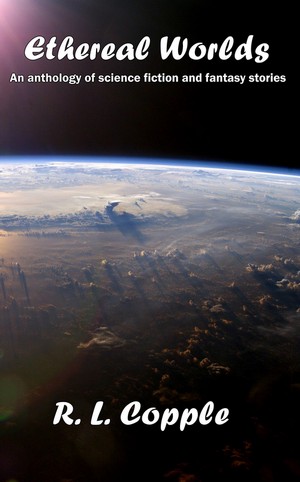 Introducing Ethereal Worlds, an anthology of 23 space-opera-style science fiction and fantasy stories written and appearing in magazines between 2006 and 2010. Two of the stories have never appeared anywhere before, and one is set to come out in ResAliens around the beginning of 2011.
Follow Moth Man as he searches for the light, and in a spoof, searches for Rumor. Deal with an angel who thinks a dragon and dragon-slayer marrying is a good idea. Ride into Neptune's atmosphere as man discovers what is there for the first time. Learn that a toilet can be used as a dimensional transportation device. Hours of fun stories await the brave reader of this compendium.
Currently the book is available as an ebook at Amazon, Smashwords, and soon at Barnes and Noble, IBooks, Sony, Kobo, Diesel, and other online ebook retailers.
What? Don't have an ereader or don't care to read on a screen? It will also be coming out in paperback soon through CreateSpace. Will announce when it becomes available.
Don't miss out! And if you haven't decided yet what to do with that Christmas money, can you think of anything better than enjoying fun stories? Go for it!
Introducing Ethereal Worlds, an anthology of 23 space-opera-style science fiction and fantasy stories written and appearing in magazines between 2006 and 2010. Two of the stories have never appeared anywhere before, and one is set to come out in ResAliens around the beginning of 2011.Follow Moth Man as he searches for the light, and in a spoof, searches for Rumor. Deal with an angel who thinks a dragon and dragon-slayer marrying is a good idea. Ride into Neptune's atmosphere as man discovers what is there for the first time. Learn that a toilet can be used as a dimensional transportation device. Hours of fun stories await the brave reader of this compendium.
Currently the book is available as an ebook at Amazon, Smashwords, and soon at Barnes and Noble, IBooks, Sony, Kobo, Diesel, and other online ebook retailers.
What? Don't have an ereader or don't care to read on a screen? It will also be coming out in paperback soon through CreateSpace. Will announce when it becomes available.
Don't miss out! And if you haven't decided yet what to do with that Christmas money, can you think of anything better than enjoying fun stories? Go for it!
Subscribe to:
Posts (Atom)